Movel AI · 2025 — 2026
Movel AI
Fullstack web development on Seirios — the fleet-management and navigation platform for autonomous mobile robots.
- Role
- Fullstack Web Developer
- Timeline
- 2025 — 2026
- Links
- live ↗
Overview
Movel AI builds autonomous mobile robots (AMRs) and the software that drives and coordinates them. That software is Seirios, in two parts: Seirios RNS (Robot Navigation System) — a browser interface that runs on each robot — and Seirios FMS (Fleet Management System) — the web platform for operating an entire fleet. I worked as a fullstack web developer across both.
The challenge
Robotics interfaces are real-time and safety-critical: an operator has to see exactly where every robot is, drive it, and trust an emergency stop — all over a live connection to hardware on the ground. The web layer has to make that state legible and responsive, and stay in sync with robots as they move, map, and run tasks.
My role
- Fullstack web developer across the Seirios FMS platform and the RNS browser interface.
- Build operator-facing features — dashboards, live maps, task and queue flows — and the Python APIs and real-time plumbing behind them.
- Keep the browser UI in step with the robots in real time — state and commands flowing over MQTT and ROS.
Seirios FMS — the fleet platform
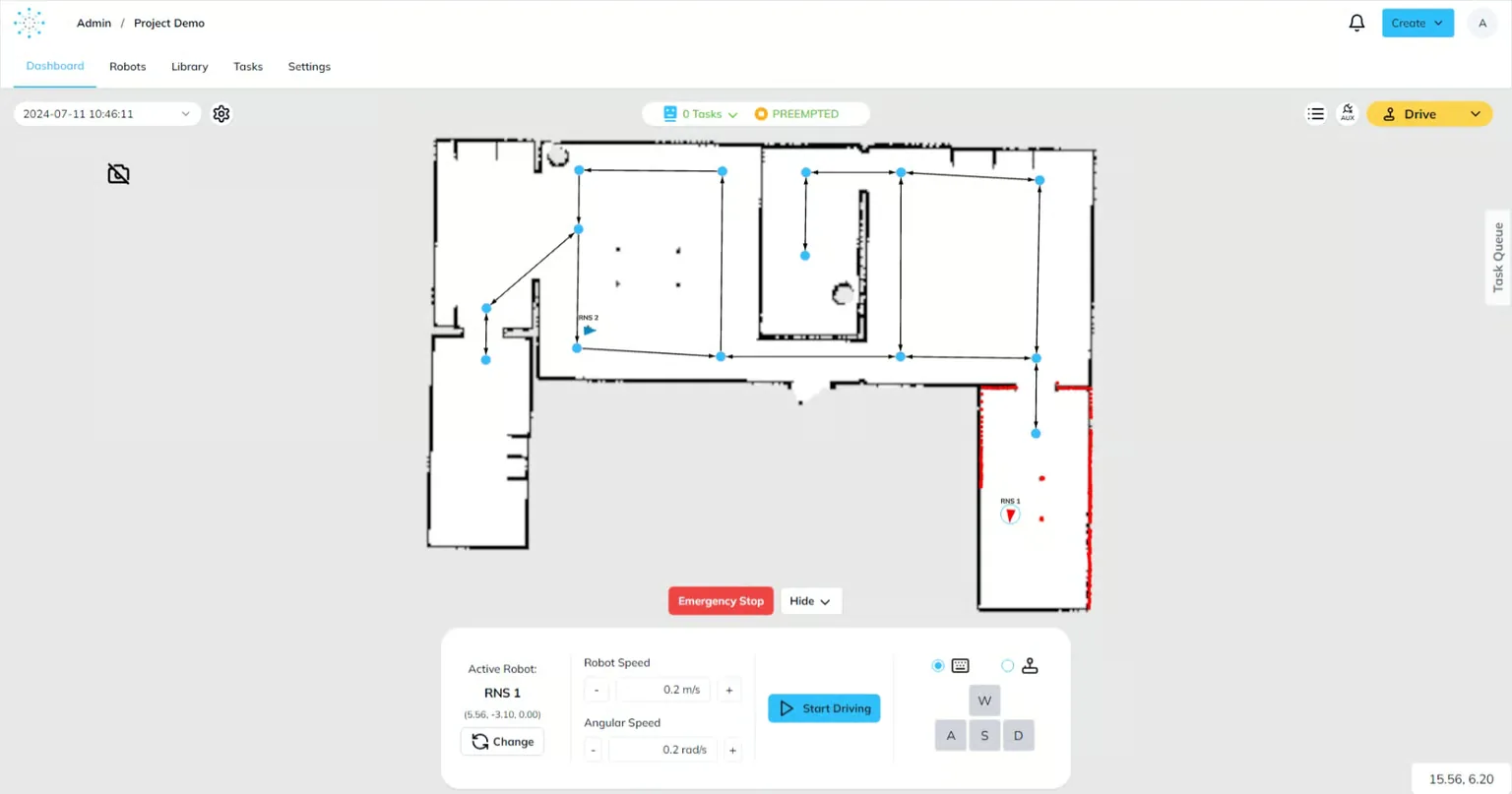
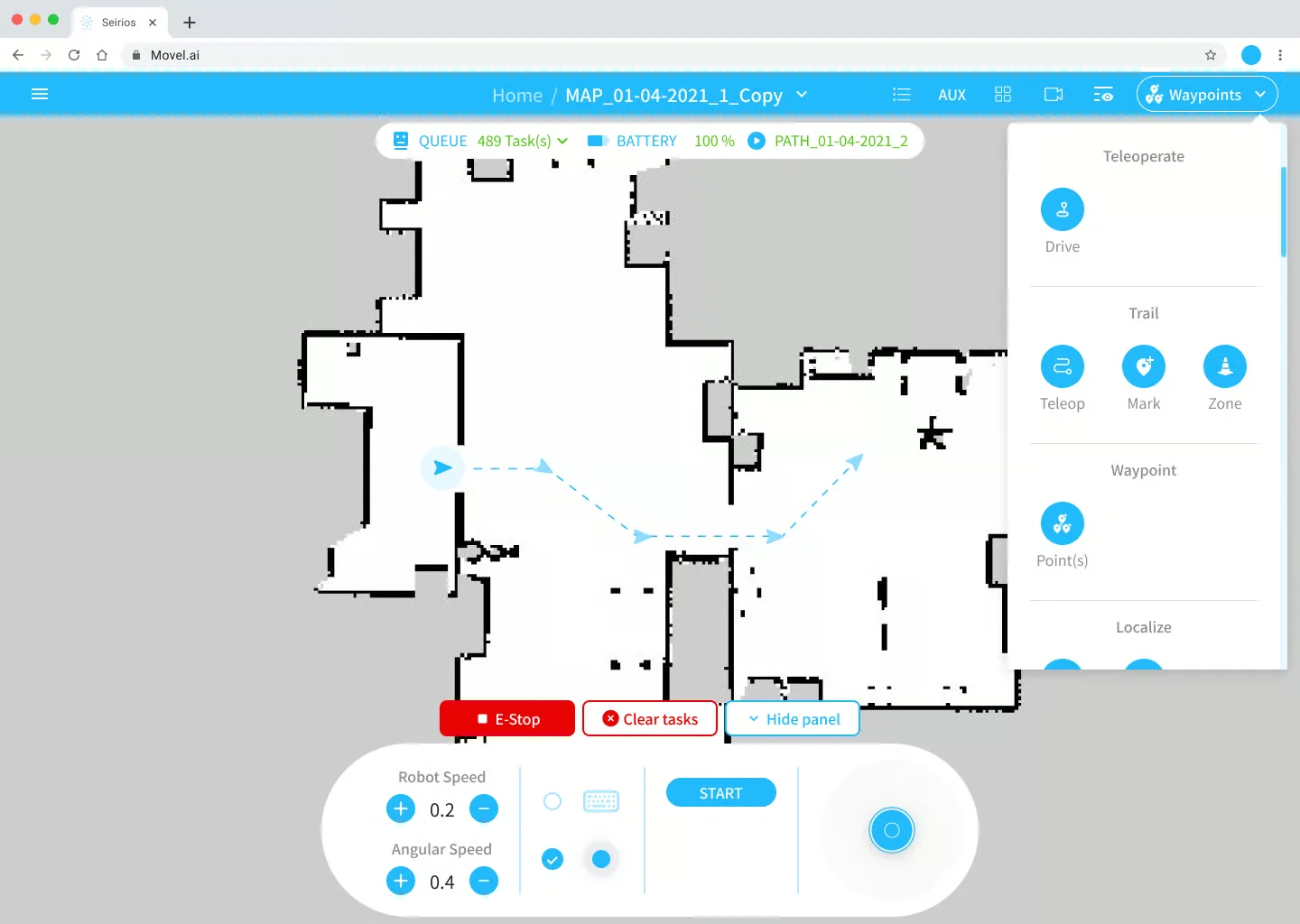
FMS is the central web workspace for operating multiple robots across projects, with role-based multi-user access. The dashboard renders a live map of the fleet — each robot's position and heading on the navigation graph — with per-robot drive controls and an always-reachable emergency stop.
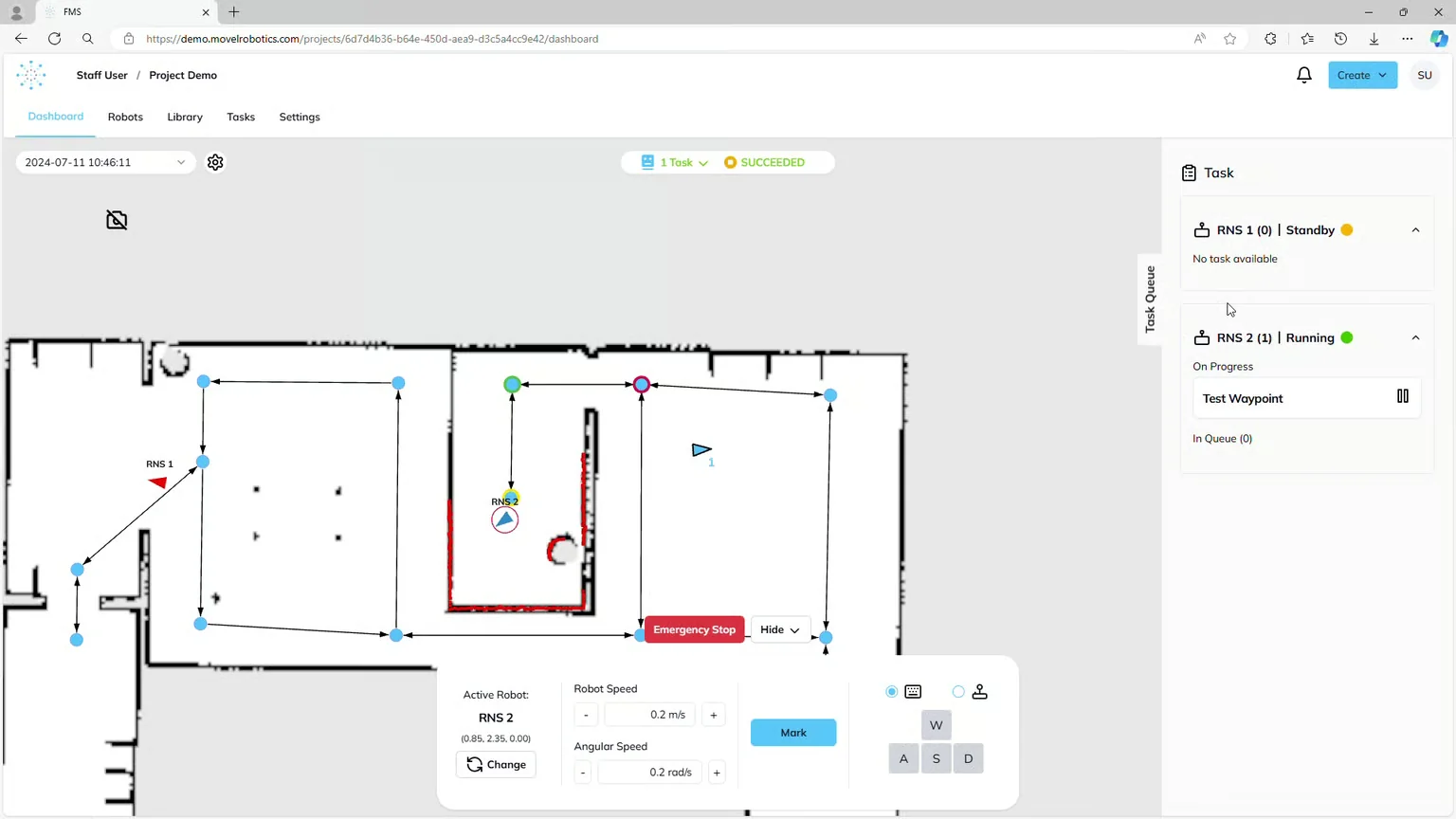
Maps are first-class: a map library to import, preview, edit, and connect the navigational maps robots run on.
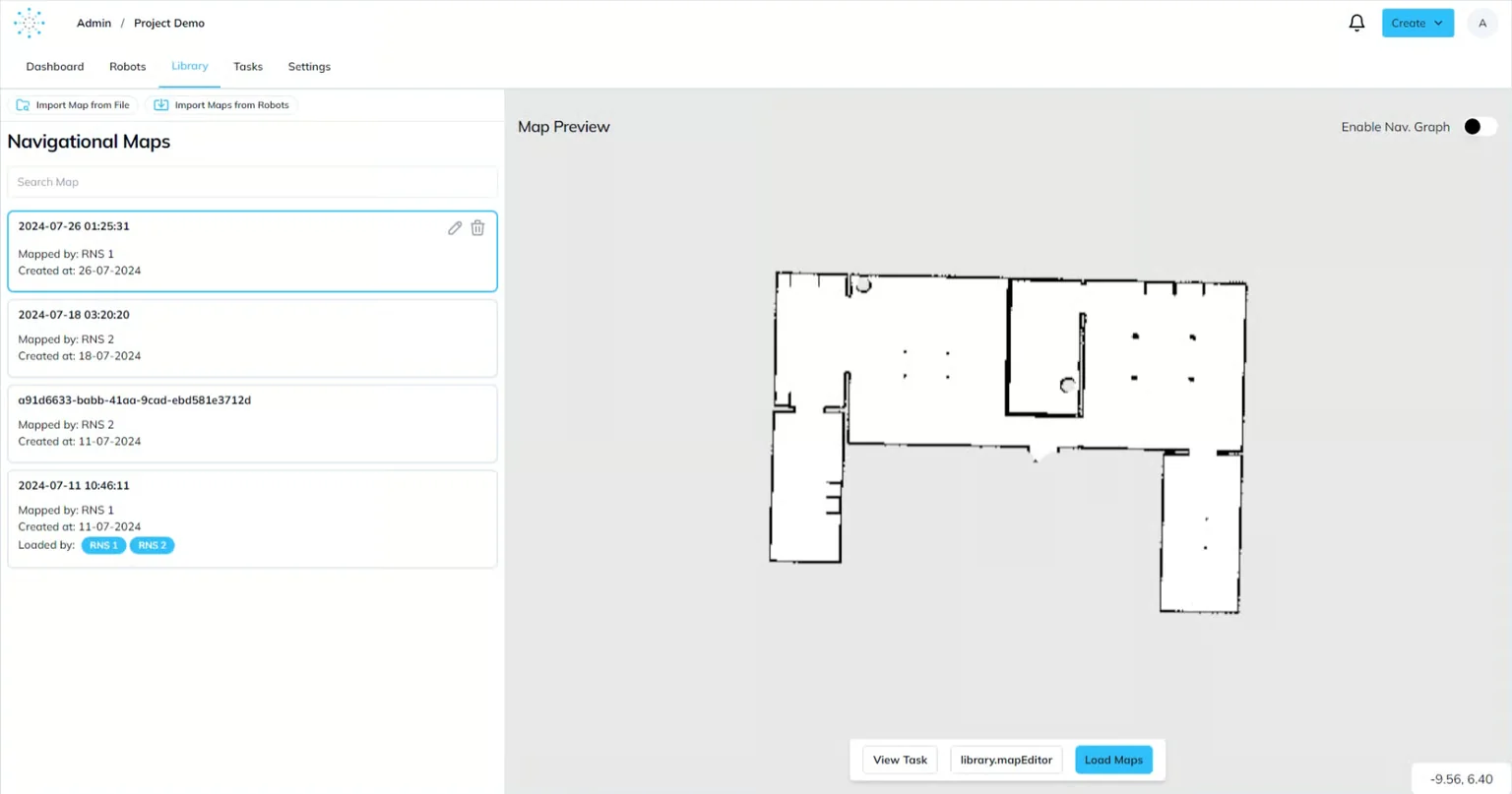
Work is dispatched as tasks — waypoint, trail, and custom tasks that an operator assigns to a robot and either runs now or adds to its queue.
Seirios RNS — the robot's browser
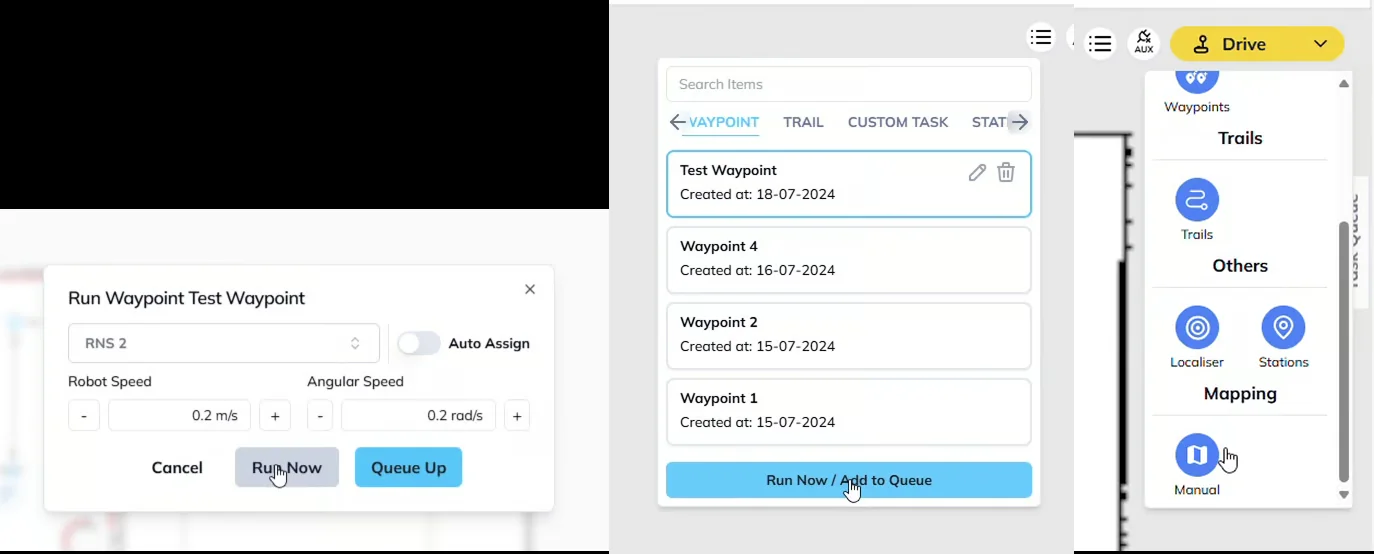
RNS is the interface on each robot for manual and autonomous movement — teleoperation, waypoints, trails, zones, and localization — driven straight from the browser.

Live mapping (SLAM)
A robot learns a space by being driven through it. During mapping, the interface streams the live SLAM state — the camera's tracked feature points on one side and the point-cloud map growing in real time on the other — so an operator can watch coverage build and know when a map is complete.
Under the hood
- Web: React + TypeScript single-page apps for both FMS and RNS.
- Backend: Python services with a PostgreSQL data store behind the operator UI.
- Robots: MQTT and ROS carry live state and commands between the platform and the robots — positions, task status, and controls.
Tools
Figma · VS Code · Git
Next project
Hanami Language Centre→